
Venezuelan quake jacks up portion of Trinidad coastline
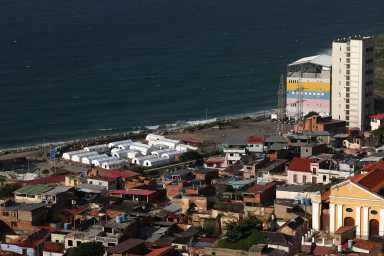
Geologists in Trinidad say they are baffled but are not surprised that a portion of the island’s southwestern coastline has been jacked up by at least 20 feet following last week’s tragic earthquake in neighboring Venezuela.
Residents in the coastal district of Galfa awoke on Thursday to elevated parts of the coastline and immediately attributed it to the two major quakes in Venezuela and the dozens of aftershocks ever since. The quakes have killed nearly 2,000 people with authorities reporting that up to 70,000 more are believed to be missing, buried under collapsed multistory and other buildings.
Local geologists, including those from the local campus of the University of The West Indies, agreed with the residents that the change in topography had much to do with the major seismic activity in Venezuela which is just seven miles south of Trinidad.
Local media have made much of the incident, describing major land slippages, signs of continuing land movements, bubbling water pools, oil seeps, hissing natural gas areas, and large fissures in the land in its new configuration.
Area residents also reported the sight of dozens of dead fish, crabs, and other marine animals in the area.
The Express newspaper quoted Geologist Xavier Moonan as saying that the situation has been caused by a reactivated slump linked to saturated soil and rocks.
“When it slumped downward, it lifted the coast, part of the beach, and the seabed,” he said. “It lifted it up out of the water. It happened so quickly that it caught fish, crabs and stingrays off guard and they were left out of the water, where they eventually died. Boulders rolled and crushed the stingrays. So, it happened so quickly, they could not get out of the way. It happened in a matter of seconds. When the area was scooped up in the area, the animals were scooped up as well. The beach was lifted up because the hillside was tilted down.”
The rumbling of the earth was felt in several neighboring countries like Guyana and those further north in the Caribbean island chain.
The very Galfa and nearby areas are known to be home to several mud volcanoes that occasionally spew mud and attract the attention of authorities. Trinidad has been an oil and gas producer for more than 100 years.