
News
New CUNY Archives Project spotlights Dominican history
This month, the City University of New York (CUNY) completed a comprehensive review of its archives, with more than 54,000 containers and sufficient digital material to fill the Library of Congress. The archives include a comprehensive collection documenting the Dominican community’s social, cultural, and political contributions to New York and the nation.
Items and information in the collection include an exhibition on Dominicans who fought in WWII, artwork by Dominican artists, and lectures and research from the Dominican Studies Institute (DSI), located at the City College of New York (CCNY). This milestone is part of a multiyear project funded with $2.4 million from the Mellon Foundation and Craig Newmark Philanthropies.
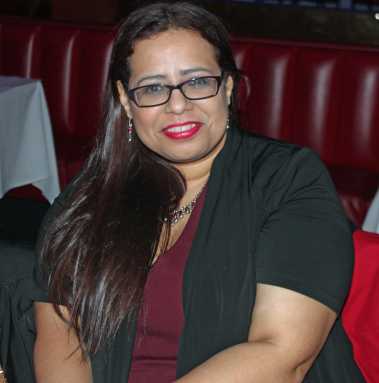
In an interview with Caribbean Life, CUNY DSI archivist Jessy J. Perez-Camilo spoke about her family background, her journey to this position, and her experience working with her team to collect all items and documents necessary for the project.
Some of her family background: She kept her father’s last name, Perez, since she didn’t want to change it after getting married, and she added Camilo to her husband’s name. Her father kept his mother’s last name instead of his father’s, because he wasn’t recognized as his son until he was 14 years old. At that time, her father decided to keep his mother’s last name. So all her sisters, who are all married, decided to keep their grandmother’s last name first.
Something most people don’t know about her is that she works at the CUNY Dominican Studies Institute as a Dominican Studies archivist; they don’t know she’s from Honduras.
“I was born and raised in Honduras. I was living in Honduras with my grandmother, Ella Perez, and my aunts from my father’s side, and we lived with them for about 10 to 12 years, because Pappy and Mommy came here in 19, in the 1980s. So that’s why we stay in Honduras. I came to the United States in 1999.
And when I was in Honduras, I was teaching kids from kindergarten to sixth grade.” She had a special interest in teaching at that time. So when I came here, I thought that’s what I was going to do.
Once she came here, she knew she had to start learning English as her second language. People in the South Bronx neighborhood where she grew up told her she had to go to Hostos Community College because she could learn English and take classes. She then went to one of the organizations in the neighborhood, and they told her the same thing.
So she decided to apply. “Dr. Perry was the one who gave me a hand, and we did everything: the application form for CUNY, then the application for financial aid, everything. He helped me, and then I started attending Hostos Community College. I was always lucky because I always had extra hands to guide me to what I am right now,” she shared.
“So one big influence that I have was my mentor, Don Idilio Gracia Peña, the chief archivist and also the founder of the Dominican archives. It’s funny because I always say this career chose me. I didn’t choose my career in a way.”
She was pursuing her Master of Arts (M.A.) in Spanish at the City College of New York (CCNY) and had financial aid, and she was allowed to work 20 hours per week at any location. She was at the Dominican Studies Institute Archives office and noticed they needed someone who speaks Spanish. So people there told her about it. She applied and went to the interview. Soon after, she got the position and started working right away with processing.
“Then, my mentor, Mr. Pena, taught me how to process a collection because I didn’t. Idea what to do or how to do it. It was my first time at an archive location doing the canvas work. So he taught me everything that I know now.”
After funding ended, she didn’t have a job, but I was lucky that they requested her to stay and work there part-time. So I continued working with Peña. She graduated from CCNY with her Master’s in Spanish. People at CCNY in charge asked her if she wanted to stay full-time, and she was deciding between a new job where everything was totally new or continuing to do something she already liked, so she decided to stay.
She started out as an assistant archivist early on, and then she was encouraged by CCNY Professor of Dominican Studies Sarah Aponte, and many others, to pursue a Master’s of Library and Information Science degree (M.L.I.S.) in Library and Information Science, which she did at Queens College from 2013-2015, and the graduation ceremony was in 2016.
She shared that all her knowledge of Dominican Archives came from the collections and from experiencing the neighborhood and the Dominican community in Washington Heights, because, in reality, as a Honduran, she didn’t know anything about them. She also pointed out that, as a student, you study something because you have a passion for it when you start, but by the end, you don’t know if you’ll still have that passion. For her, it’s really important to do what she does, not just because she likes it.
“I’m lucky to do something that I really like, but I’m only lucky to be effective for the community and to understand the community through my family, through my in-laws, because my husband is of Dominican descent. So, with all the encouragement from my husband, family, and community, and knowing that each collection is processed, I give this love to the world. It is really a blessing that this career chose me,” she added.
Another reason Perez-Camilo likes her job is that, by collecting these items, she and her team have helped rebuild families’ connections to the Dominican Republic that they may not have had before.
Perez-Camilo said she was one of the lucky ones to say yes to doing this because at first, she and her team didn’t understand how big the project was. They only understood that a survey was necessary.
So the first thing they did was review it, making changes where needed and ensuring that all materials in each collection were properly preserved.
“It is more like my dictionary right now, the survey. I use that survey, and now having that survey is like a guideline. To find anything that you have in the archives is amazing because I can just go looking for stuff that I remember the name of, and the days, and then I find where it is physically in my archives.”
For Perez-Camilo, CUNY is the best place for this project, and meeting these three great women, Regina, Natalie, and Bridget, was wonderful because they were part of the team, working as extra hands. Working with them for this project was her first time seeing all the archivists and CUNY thinking together and trying to work together, because most of the time it wasn’t done that way.
“I always say that this project helps not just to have visibility, but also has a way to organize better collections, and to have a collection in a management program. I am just happy and blessed that this project exists, and I encourage the people working on it to continue doing this kind of work because it’s a blessing for smaller guys like us. So they are a bridge now for us.”
She added that she doesn’t want to think about the ending of the project because the team has provided much help, and thanks to them, the CUNY DSI team has some archive management software we can use for collections online that have visibility not just in the United States, not just in CUNY, but in the world.
In addition, research associate Edward de Jesús brought the project to the Institute’s attention, and Perez-Camilo and her team began getting most of the information from him. One of the exhibits shares details of what it was like for veterans to serve in the military during WW2. Her husband was also a veteran, and she began to understand the importance of veterans and to learn about the history of their military service, their families, and the country as a whole.
Another exhibit for this project features artwork by Dominican artists, submitted through an open call. One of the pieces that impacted Perez-Camilo was done by the García sisters, whom she knows personally. One of them, Scherezade García, did her Master’s degree at CCNY, and Perez-Camilo went to her thesis presentation, and for her, it really was nice to see García growing from the last time she saw her, up to now.
“For me, it’s really important that the new generation understand that books can be digitized, say, or can be born digital because that’s what’s going on. However, we will have physical materials in the archives. We are always going to have this kind of job, and it is going to be one of the few jobs that AI can’t substitute for us because of the physical material,” she continued.
Furthermore, Perez-Camilo believes in helping young people, and she always tries to give them everything that she receives. Because she was blessed by her mentors and anyone she met before she was the archivist, some of the ways she does this include through the Summer Youth Employment Program (SYEP), where she has 10 students each summer. According to her, there are also five different high school internships in this field, in which most students either get paid or earn class credits.
Perez-Camilo also stated that it would be nice to have more Hispanics working in the CUNY DSI Archives, especially Dominicans, because at the moment, Jhensen Ortiz is the only Dominican archivist she knows. And he’s especially interested in Dominican Studies. As a Hondurian, she’s motivated to keep working there because of all that she’s learning, and because I care about that population.