
Caribbean RoundUp: Antigua and Barbuda, Barbados, Caricom, Jamaica, and more
Antigua and Barbuda
Antigua and Barbuda Prime Minister Gaston Browne has officially taken over as chair of the Organisation of Eastern Caribbean States (OECS) Authority during the opening of its 78th meeting in Antigua.
He succeeds St. Vincent and the Grenadines Prime Minister Dr. Godwin Friday, who served as chair over the past year. The ceremony brought together regional leaders, officials, diplomats, and representatives from across the OECS.
“In assuming the chairmanship, Prime Minister Browne will take on the responsibility of guiding the premier decision-making body of the OECS at a time when the region faces both significant opportunities and complex challenges. The OECS continues to advance regional integration, economic cooperation, climate resilience, food and energy security, freedom of movement and enhanced collaboration in areas such as education, health, security and digital transformation,” the release stated.
Browne said his tenure as OECS chairman will focus on strengthening regional economic self-reliance and improving the living standards across the Eastern Caribbean through major transformative initiatives. He has also called on OECS leaders to pursue bold, innovative projects aimed at deepening regional integration and creating a lasting legacy for future generations.
“The assumption of the chairmanship also comes at an historic moment for Antigua and Barbuda, which is preparing to host the 2026 Commonwealth Heads of Government Meeting (CHOGM). The Government views both responsibilities as complementary opportunities to elevate Antigua and Barbuda’s leadership on the regional and international stage while championing the interests of Small Is land Developing States and promoting sustainable development throughout the Caribbean,” the release stated.
Barbados
Discussions between the Development Bank of Latin America and the Caribbean (CAF) and Barbados’ Ministry of Finance have begun with the intention of improving access to financing for local businesses. The discussions focused on how CAF’s funding can help companies expand, boost exports, and become more competitive.
Finance Minister Ryan Straughn said the private sector is key to Barbados’ economic growth and stressed that stronger exports will depend on increased investment and leadership from businesses.
“Export-led growth is not a government project with the private sector as cheerleaders on the sideline,” Straughn said. “It requires investment, risk and bold commercial decision-making.”
Straughn said that after years of fiscal reforms under the Barbados Economic Recovery and Transformation Programme (BERT), the country’s focus has shifted to building a stronger, more competitive economy.
CAF Regional Manager Stacy Richards-Kennedy added that the discussions were intended to identify practical opportunities for collaboration between CAF and Barbados’ private sector.
“If we are serious about economic growth, jobs, exports, and resilience, then the private sector cannot be on the margins of development. It has to be at the centre,” she said.
Stacy Richards-Kennedy said positive economic forecasts from the Central Bank of Barbados show that investment in infrastructure, renewable energy, and tourism will boost growth and jobs. She also said public-private partnerships can attract private funding and expertise to support national development.
CAF vice-president for Private Sector, Antonio Silveira outlined CAF’s financing options, including loans, credit, guarantees, equity investments, and technical support, adding that these align with Barbados’ BERT 3.0 priorities in infrastructure, renewable energy, digital transformation, and capital market development.
CAF approved US$10.3 billion in private-sector financing in 2025, making up more than half of its total approvals. It also expanded support in the Caribbean, including a US$35 million financing facility for small and medium-sized businesses in Trinidad and Tobago. CAF is also working with the Caribbean Development Bank and other partners to create more financing opportunities to boost private sector growth across the Caribbean.
Caricom
St. Lucia’s Prime Minister Philip J. Pierre, the incoming chair of Caribbean Community, has urged member states to strengthen regional cooperation by focusing on food security, climate resilience, sustainable development, and safety. St. Lucia will take over the six-month CARICOM chairmanship on July 1 from Terrance Drew.
Pierre said St. Lucia’s vision for Caribbean Community is based on cooperation, economic renewal, climate resilience, food security, and sustainable development. He stressed the need for stronger regional unity to address global challenges.
The 51st CARICOM Heads of Government Meeting will take place in St. Lucia from July 5–8, with the opening ceremony at Sandals Grande St. Lucian on July 5.
Pierre said St. Lucia is taking over the role of Caribbean Community chair during a time of major global change. He stressed that the region must move beyond resilience by renewing its economies and institutions while delivering real benefits to its people.
He added that Caribbean countries can achieve more by working together, highlighting the importance of the region’s strong tradition of cooperation.
Pierre described the role of chairmanship as an important milestone for both Saint Lucia and CARICOM, saying the smooth leadership transition reflects the region’s unity and commitment to its people.
CARICOM leaders will hold formal business sessions on July 7 and 8 to discuss major regional issues.
Cuba
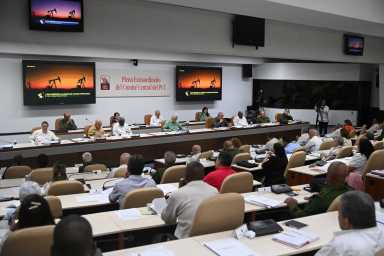
The Communist Party of Cuba has approved an emergency economic package introducing major free-market reforms to help revive Cuba’s struggling economy due to increased pressure from the United States.
The measures include expanding private businesses, giving more authority to local governments and state companies, and attracting more foreign investment, including from Cubans living abroad.
Meanwhile, power outages have sparked protests in several neighborhoods in Havana.
“Cuba resists heroically and creatively, but has endured for too long a barbaric, undeserved and unbearable punishment, to which is now added the threat of military aggression,” President Miguel Diaz-Canel said in the closing speech of the Communist Party session.
Díaz-Canel said Cuba’s emergency economic plan was inspired by the market-oriented reforms of China and Vietnam, while maintaining one-party rule. The proposal will now be debated by the National Assembly of People’s Power during a special session that was called without prior public notice.
The announcement follows months of rising pressure from the United States and recent high-level talks between both countries, including involvement from Raul Guillermo Rodriguez Castro.
US Vice-President JD Vance said the US is closely monitoring developments in Cuba and will decide its response based on the island’s actions, warning that US measures will depend on how Cuba proceeds.
Jamaica
A memorandum of understanding has been signed between Jamaica and the United States allowing third-country nationals transferred from the US to transit through Jamaica on their way to other destinations, including their home countries.
Deputy Prime Minister Horace Chang said the agreement, approved by Cabinet and signed on June 10, does not permit any of the individuals to be permanently settled in Jamaica
“The agreed quota is for 25 individuals to be facilitated every two weeks for transit through Jamaica to a third territory, including their home countries,” he said.
“At no time will the number exceed 25, because we have the right to refuse anyone at any time and both parties can terminate the entire agreement without any long-term notice,” Chang added.
Chang said discussions on the operational details of the arrangement are still ongoing and that the United States will cover the costs of the migrants’ initial stay in Jamaica, but any individuals wishing to remain in the country would need to apply for asylum through the courts.
“If they get asylum status, we retain them, if they don’t, we send them home,” he said.
Chang said the government is coordinating with the International Organisation for Migration to arrange suitable accommodation for those accepted under the agreement. He added that no arrivals will take place until all operational details are fully completed.