

Caricom sub-region face US pressure to take deportees from foreign countries
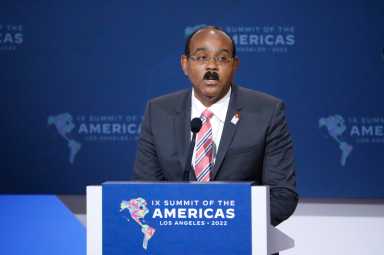
CARICOM’s eastern Caribbean sub-grouping is meeting in Antigua this week to discuss a number of issues, with the key one being pressure from the US to accept deportees from foreign countries — and some of the member nations are saying they will push back against the initiative.
Leaders of the seven-member Organization of Eastern Caribbean States (OECS) say they are growing increasingly uncomfortable with the level of pressure being exerted on them to accept relatively large numbers of non-nationals that the US wants to dump on the sub region.
Speaking at the summit, Vincentian Prime Minister Goodwin Friday announced plans for a broad-based advisory sub-regional team to lead negotiations with Washington with a specific emphasis of limiting the number of deportees who will be sent to member states.
“We are still working through this matter very carefully because it holds serious implications for our economy, the safety of our people, the utilization of scarce resources and for our sovereignty. Very early on in the year, we were required to consider and navigate the delicate and serious matter of the request from our development partner and friend, the US, that our member states assist them by accepting persons deported from the US who were not our own citizens,” Friday told fellow leaders. “What may be mere tremors for large nations are experienced as earthquakes by us, small island developing states. We, therefore, suffer the consequences the worst and the longest.”
But host Prime Minister Gaston Browne was more strident in his criticism of the issue, saying that his federation with Barbuda would stoutly resist any large number of non-nationals being sent to live among locals in the country.
The US has proposed sending 10 deportees each month to make an annual total of 120, but Browne says he would not have any of this because of concerns related to security and scarce resources.
“The deployment of economic coercion as an instrument of foreign policy,” Browne told colleagues. “We are not being uncooperative here, but this idea that they could send us 120 individuals, we have said to them this is totally unacceptable. We have sent them a counter-proposal. We said that we’ll accept 10 annually. No more than 10.”
Discussion about the so-called third country national deportation system is occurring just days after Jamaican officials confirmed that the island is also in talks with the US on the issue.
Numbers vary from accepting up 10,000 to no more than 25 at any time and with the proviso that the northern Caribbean island would be used mostly as a transit stop for such deportees.
Other regional member states like Guyana and Dominica have confirmed negotiations with the US, but none has as yet announced the arrival of any from the US.
The full slate of CARICOM leaders is expected to meet in St. Lucia in early July with the topic likely to be discussed in caucus among leaders alone, officials say. End/bw