

‘A Terrible Intimacy’: Feel like a real true-crime solver with this fascinating historical account
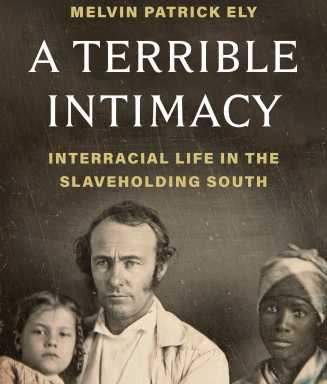
Time served.
If you’ve ever faced a judge in a courtroom, that’s what you hope to hear. A few hours in a concrete room, maybe an uncomfortable overnight, done. It’s not fun, it might be embarrassing, but it’s over and you move on, chastised. Unless, as in the new book “A Terrible Intimacy” by Melvin Patrick Ely, time served was a lifetime.
When you think about slavery, the image of large fields and entire households full of enslaved people probably comes to mind.
That, says Ely, isn’t the whole story. In the years prior to the Civil War, he says, roughly “one-quarter of America’s enslaved people lived on large plantations with fifty or more forced laborers…” Another 25% dwelt on smaller plantations with slightly fewer enslaved people.
The rest — about half of this country’s enslaved people — lived on small farmsteads; in fact, households that held five or fewer enslaved people “were very numerous.”
This, Ely says, meant that slaveholders were very familiar with those they held in bondage, and they likely knew those held by their neighbors. They might have attended church with enslaved people, or sought medical help from an enslaved Black doctor.
“Trade across racial lines was frequent,” he says, describing shared recreation as “not rare.”
Melvin Patrick Ely.Al SaliSuch “intimacy” sometimes led to looser rules for enslaved people. It also led to a surprise: “An enslaved person charged with a crime in Virginia, and in the South generally, would have had legal representation” in the case of an alleged crime.
A Black man named Tom, for example, was accused of killing an overseer in a fight, but was the fight cloaked in a whole other matter? Nancy Morgan was viciously murdered by a “negro” named Solomon — or was she nothing more than “a wayward, shiftless pauper”? Mary Tatum accused George of rape. Was it a case of mistaken identity?
And when Hillery Richardson was mortally wounded by William, the jury had to decide: Who was really the victim?
So you say you’re a big fan of mysteries. Nothing like a good whodunit, right? Then check out “A Terrible Intimacy” and see if it doesn’t fit just perfectly.
Because it will. Reading author Melvin Patrick Ely’s work is like having Matlock on the sofa by you, and Easy Rawlins next to her. It has a historical angle that Ely is studiously careful to explain, and the kind of excitement you’d expect from life-or-death testimonies, a few shockers, and some heartbreak. Readers will clearly understand Ely’s obvious excitement in teasing apart these tales; they are, after all, things that happened to real people in real court cases, presented with a shared knowledge of 19th-century vocabulary and slang, culture, and with filled-in-the-blanks for deeper understanding. If you feel like a real sleuth while you’re reading, you’re not far off.
This is a book well-told by a great storyteller, and if you’re a fan of courtroom-thriller novels or historical events, you won’t be sorry to find it. Start “A Terrible Intimacy” and it will serve you well.
“A Terrible Intimacy: Interracial Life in the Slaveholding South” | Melvin Patrick Ely | c.2026, Henry Holt | $31.99 368 pages